CULTURE
Between the rows of gaudy, white luxury yachts and recreational boats, the Mo‘okiha O Pi‘ilani stands out with its two-toned base: off-white and a deep maroon. The wooden ku‘a of the canoe lies on the planked floor, holding up the rest of the outrigger – the main sweep to steer, the eight compartments, the beds and the small platform sticking out of the manu mua - the seat of the ancestors. Two large skeletons made of thick string are tied to the masts, resembling the contours of sails.
An aged man, with red leather skin reflecting years of sun, mans the stays. A large, shark-tooth necklace hangs from his neck, casting a shadow on his graphic t-shirt stained by a singular spot of bleach. His face is covered by a brown cap bearing a fishhook logo, with eyes hidden behind dark lenses, obscuring indicators of emotion.
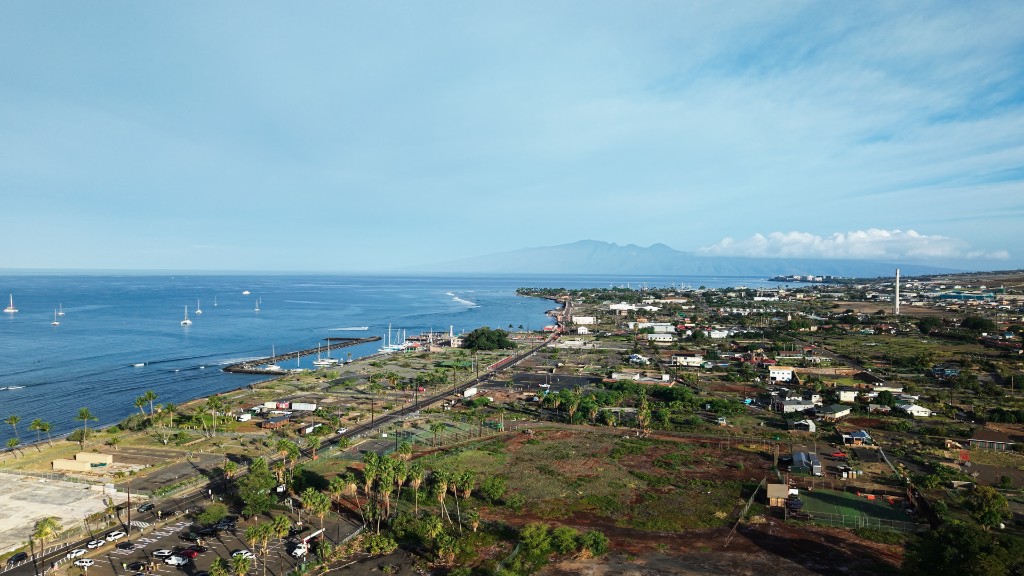
He helped craft this 62-foot wa‘a kaulua for 28 years. He is the Kapena, the captain and boat builder of Mo‘okiha O Pi‘ilani. Its birthplace sits at Māla Wharf in Lahaina, Maui, but now it floats in Māʻalaea Harbor, less than 20 miles away from its home.
“We want to get it back in Lahaina, where it's from,” Timothy Gilliom said, better known as “Timi.”
Gilliom is a master of many trades - fishing, surfing, building canoes, and reading the sky. His mentor was Kālepa Baybayan, a Pwo navigator and original sailor of the Hōkūleʻa in 1975. Now, it has come full circle – Gilliom’s now-voyaging partner is Kala Baybayan Tanaka, the daughter of his former advisor.
She is an educator and navigator with Hui O Wa'a Kaulua, the Maui denomination of the Polynesian Voyaging Society (PVS), a non-profit established to research and perpetuate traditional Polynesian sailing methods. Since Kala’s father was a sailor, she grew up around the Hōkūleʻa and canoes like it. It was an everyday occurrence - visiting the harbor, small feet on creaking wood, and watching uncles and aunties tighten the ropes, scrubbing the hull and prepping food for the next trip.
“Growing up around the canoe, I thought that the canoe was family,” she said.
On top of the 2023 Lahaina wildfires that leveled centuries of Hawaiian history and culture, the island is in a perpetual state of recovery from decades of Westernization that decimated infrastructure, tradition and environmental connection. Cultural advocates are battling to reconnect with ‘āina, and voyaging has been one of the ways for people to restore belonging. Without that connection, a new generation of Hawaiians would be lost, deprived of a sense of self.
The origin story of Native Hawaiians can be tied back to the Austronesians of Taiwan, who entered the Hawaiian Islands around the second century. Along with people, they brought outrigger canoes, food, and navigation techniques that utilized the migration patterns of birds overhead, the swells and the twinkling sky.
From then on, the canoe played an important role in the flourishing of early Hawaiian life, serving as a primary means of transportation within and around the islands – a key foundation in the survival of Hawaiians for centuries.
However, European arrival diminished the use of larger outrigger canoes by the late 1700s. Yet, the course of colonial dominance and assimilation would fizzle out in the late 1960s due to grassroots resistance against Western assimilation policies after statehood in 1959. That struggle transformed into the Second Hawaiian Renaissance, a political and cultural movement still relevant today that renewed interest in cultural tradition and history.
How the Hawaiian Islands were reached was a point of contention for hundreds of years. Early European navigators assumed that the limited voyaging gear of the islanders could not cover long distances across the ocean. In the modern century, historians such as Andrew Sharp purported that the islands of Polynesia were accidentally settled by wayfarers pushed westward by winds and currents.
The mystique of the Hawaiian origin story was the principal motivation for the construction of the Hōkūleʻa and the 1976 voyage from Hawai‘i to Tahiti. While being a performance-accurate 62-foot replica of a traditional Polynesian double-hulled voyaging canoe, the Star of Gladness would not have been successful without the help of Mau Piailug, a Micronesian navigator who shared his non-instrumental navigation techniques out of concern that traditional wayfinding practices would be lost due to Western influences.
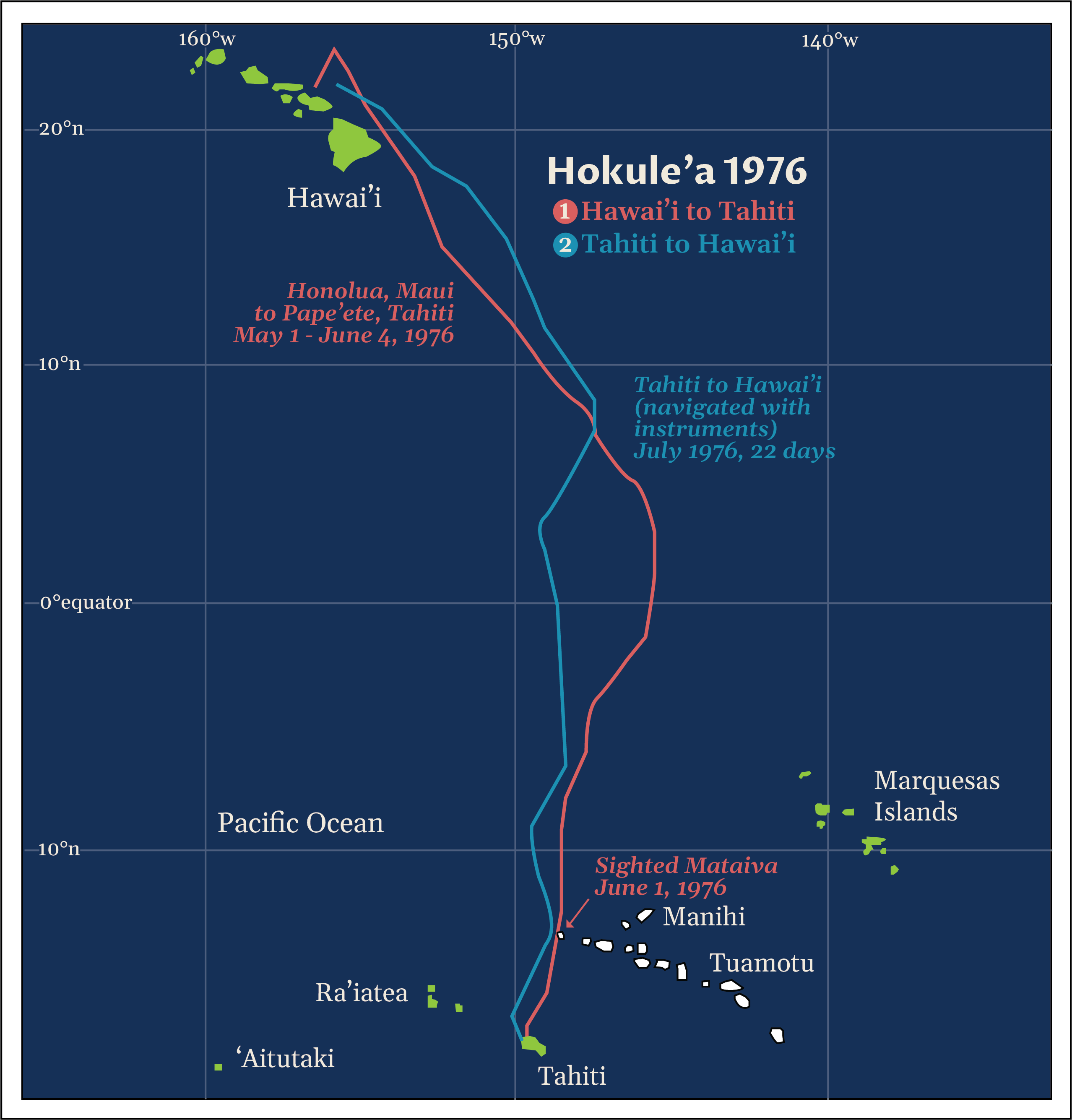
Sources: Polynesian Voyaging Society
The successful journey and use of non-Western navigation devices further stoked the fires of the Renaissance and ushered in a sense of pride for Native Hawaiians.
The organization Hui O Wa‘a Kaulua, a non-profit dedicated to preserving and promoting non-instrumental navigation and wayfinding practices, and its first canoe, Mo‘olele, were established months after the Polynesian Voyaging Society’s launch of the Hōkūle’a. After being destroyed in the Lahaina fires, Mo‘olele’s legacy resides with Mo‘okiha O Pi‘ilani.
‘Ihilani “Ihi” Garcia, one of Kala’s pupils and successor, says that most canoes are named after stars. However, Timi and others wanted to acknowledge the ali‘i and mo‘o.
Her name and birthplace are painted in blue on the backside of the canoe. This is where Kala began her journey, on the chipped paint and smooth wood of the Mo‘okiha O Pi‘ilani.
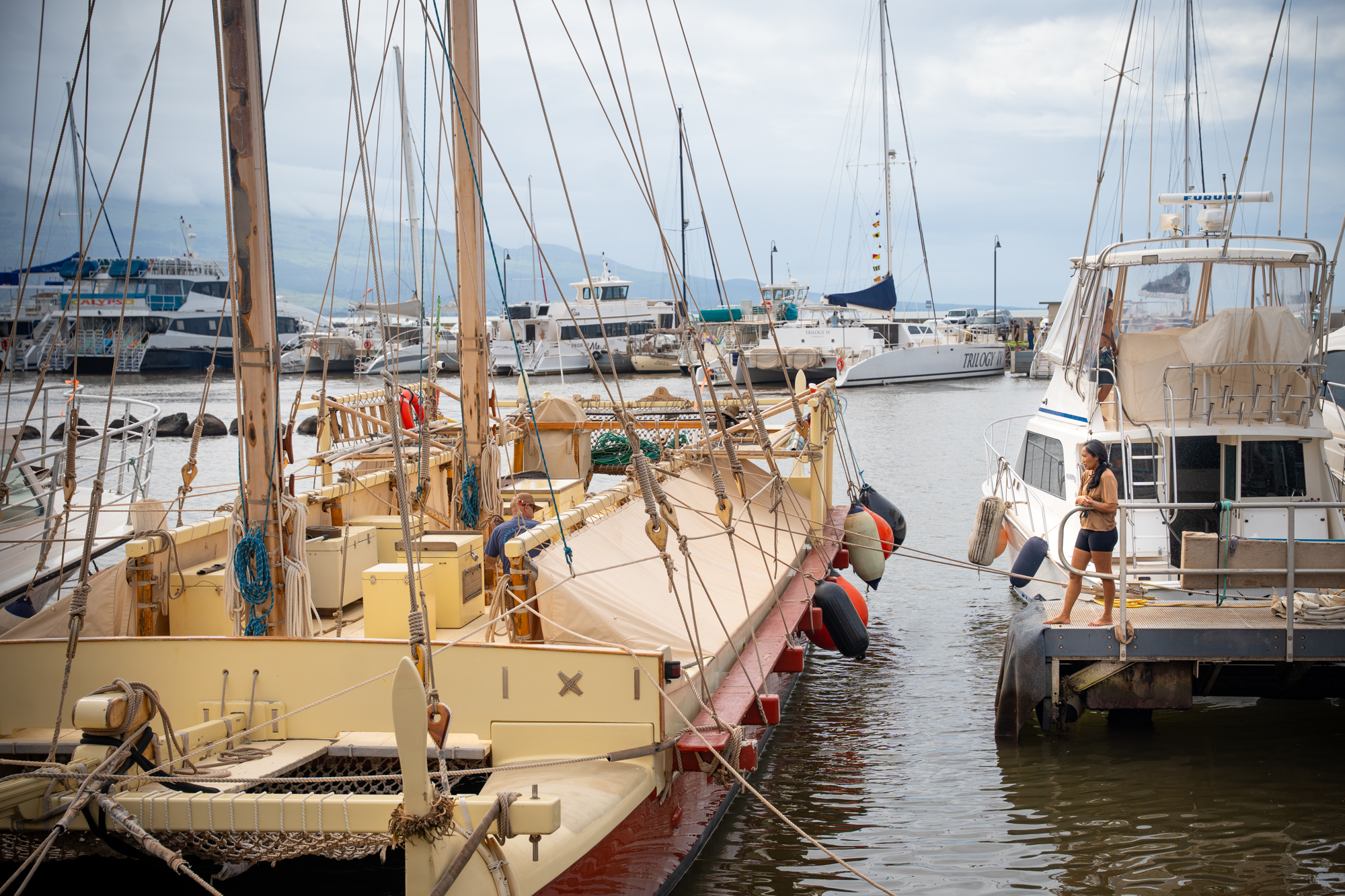
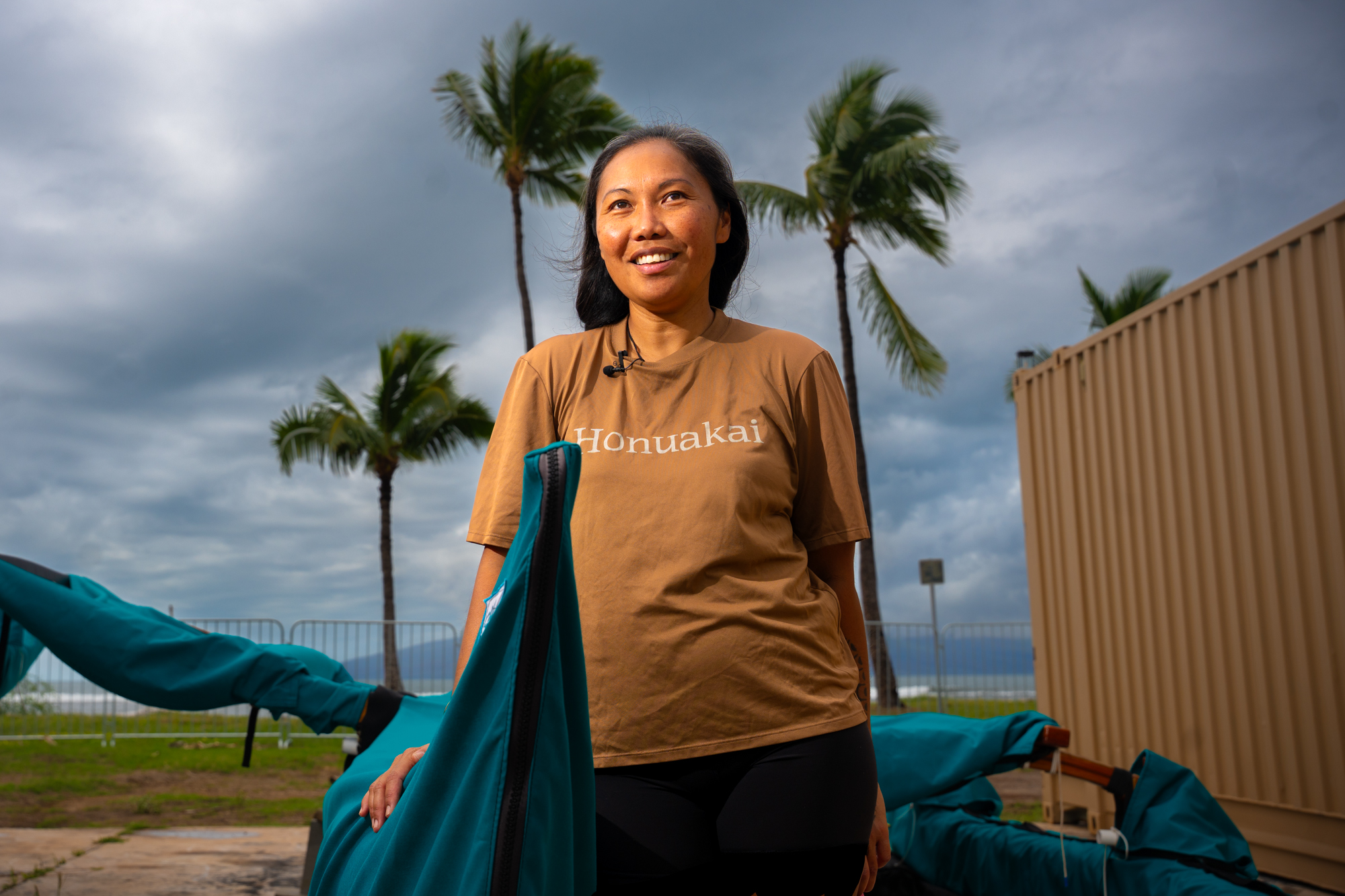
Kala Babayan Tanaka stands poised to board Mo‘okiha O Pi‘ilani. The canoe of Hui O Wa’a Kaulua floats proudly in Mā’alea harbor, waiting to be brought home to Lahaina harbor.
It started out as dry dock work, which meant getting to know the canoe either through cleaning, repairs, or by going on excursions for the community, like putting a loved one’s ashes into the sea, monitoring tsunamis, or transporting food to another island. Here, Kala recognized that Hawaiian canoes do not serve one purpose.
“It’s not just about arriving to islands, it’s also helping families and helping our community,” she said.
The knowledge of non-instrumental wayfinding has persisted through oral tradition. Like wayfinders before her time, Kala learned from an elder— her father Kālepa.
Her thick, long hair is the color of coal, save for a few strands of grey and white. A tattoo trails from her left forearm to her knuckles. Despite her short stature, Kala’s voice is confident and knowing—she is someone people turn to for answers.
“Our kūpuna, our ancestors, never had magnetic compasses or GPS, and so the system of navigation that we use is just wave lining. It's basically all the ways in which people and animals orient themselves and figure out where they are so that they can navigate from place to place,” she said.
Star navigation, wind, ocean swells and the behavior of wildlife are all methods used to indicate place.
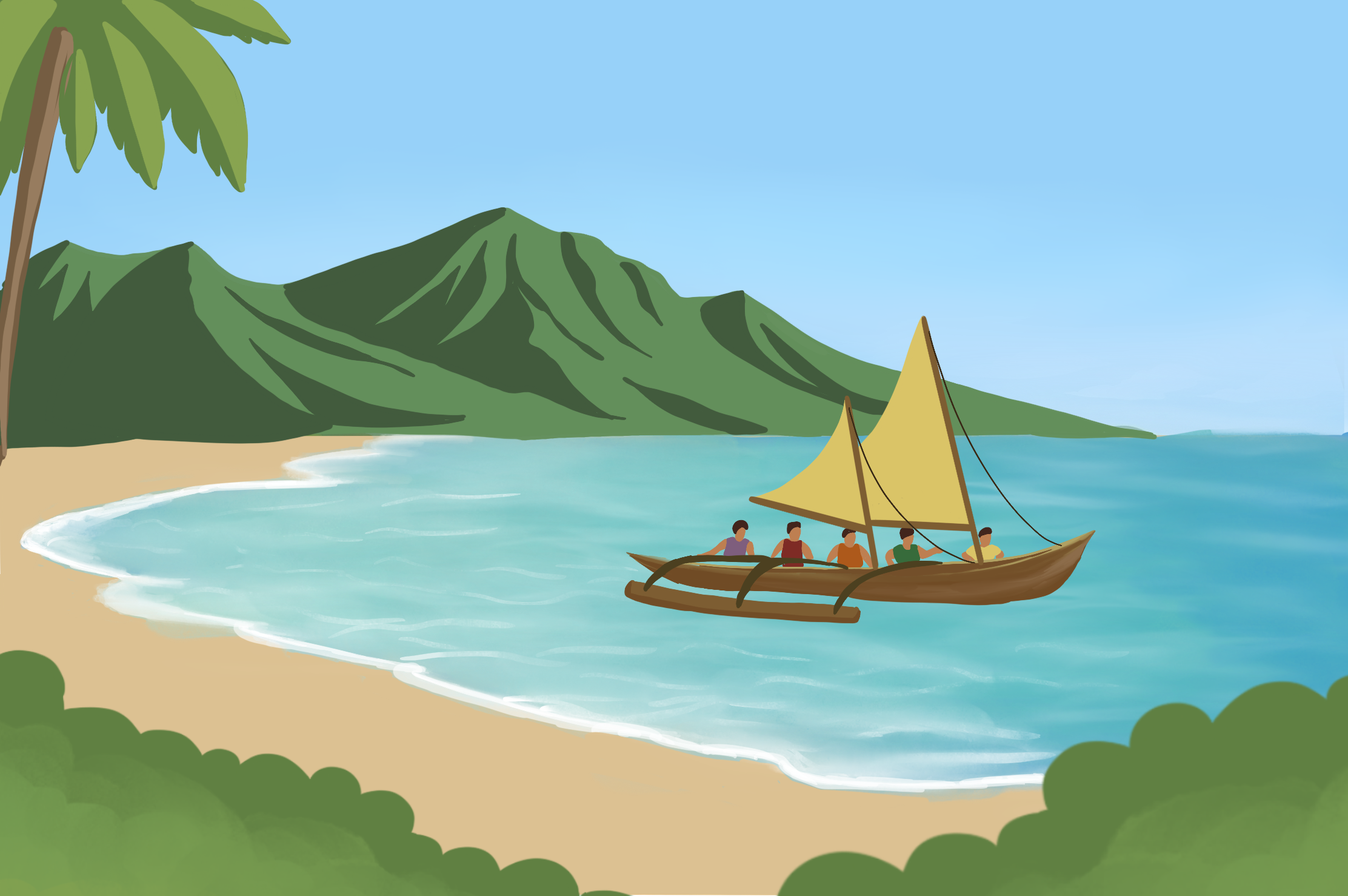
Learning the art of non-instrumental navigation, whether that’s through measuring the stars, feeling for the swells or observing the black shadow of wings gliding over the blue, glassy water, is a reconnection to the natural environment – an understanding of the earth.
Learning the art of non-instrumental navigation, whether that’s through measuring the stars, feeling for the swells or observing the black shadow of wings gliding over the blue, glassy water, is a reconnection to the natural environment – an understanding of the earth.
The canoe has become a symbol of identity, carrying unique cultural significance for those close to it.
Kala’s connection to the canoe is intertwined with her bond with her father. Given Kālepa’s involvement with PVS, she frequently grew up seeing the Hōkule’a docked or coming into the harbor. In college, she took Hawaiian language and studies classes, reuniting with her cultural identity through learning ʻŌlelo Hawaiʻi and taking her first steps onto the wooden planks into the world of wayfinding.
While it was scary at first to be amid an all-male crew that only spoke Hawaiian, knowing that her father was there was enough.
“I could see that everybody on the canoe were students of, just learning,” Kala said. “And I realized this: what a great teacher my father was.”
Alongside the canoe, the greatest lesson she learned from her father was to be present—not only being attentive to people but also to the environment. Like people, the planets, the swells and stars tell a story of where one is and where the next stop is meant to be.
Similarly, what brought Ihi to the canoe was her previous relationships. She’s from Lahaina, where she witnessed canoes being built at the local park or being docked at the harbor. Ihi also previously worked at the Pu‘u Kukui, an organization working to protect the Pu’u Kukui watershed; on some work days she had to scrape, fix and clean canoe parts. Part of the job involved drawing sediments, learning the names of flora and fauna and hiking up unpaved paths of mountainsides. During these excursions, Ihi learned the names and stories of ancestors buried all around her. Those connections seeped into how she approached the canoe and the way she carried herself.
I always think about my environment,” she said. “How I affect the place, I affect the space when I go into it, and just wanting to take care of it, I mean, falling deeply, more in love with things that I never knew existed.
The canoe was not without its own lessons. Stepping onto the hollow, smooth hull of the double-hulled canoe revealed just how vast the landscape is, where bigger, uncontrollable forces linger. While also bringing communities together, through the canoe, the connection to kūpuna stays tethered.
The canoe has endured centuries of colonization, emerging as a reminder of the essence of Hawaiian cultural identity—the environment and ancestors that were foundational to the Hawaiian practices and perspectives of today.
“It is very important that all of us have a relationship with our environment. It's something that all of our ancestors did. And that connection, a relationship people have with nature, has disappeared with all the distractions that we have today,” Gutierrez said.
For Kala, teaching the future carries on the legacy of both her father and the voyagers who came before. By carrying their stories forward, the kūpuna are still living and walking beside us through all forms of life — in the ripples of water, the swaying trees, the chirping birds and even the canoe.
“To me, this feels full circle, like I'm helping my community, I'm helping my kids, I'm helping my friends’ kids, and my family's kids connect more deeply to their culture and really understand, like that part of our identity of being Hawaiian,” she said. “I'm connecting them closer to who we are as Hawaiians and to their kupuna by reading their words.”
Voyaging has become an opportunity for Ihi to discover what kind of kupuna she wants to be —for her sister, her family and her community. She hopes that her hard work — the outreach, the long nights of lesson planning, the days out teaching in the hot sun —sparks something in a student or parent to become a kumu to continue to perpetuate tradition; and, it is getting harder in a world that moves quicker and quicker.
“I could see t“If I'm being really honest, it's hard. It's really hard. It's, you know, we have the cool videos, but it's physically straining. It's mentally straining. It's all of these things that you have to think about and plan for,” Ihi said. “But I do want to say that we are leaving it in different hands with how much more we've taught… we’re, I think, teaching it in a good way.” hat everybody on the canoe were students of, just learning,” Kala said. “And I realized this: what a great teacher my father was.”
Traditions are hard to keep. However, they can evolve and continue on by intertwining with the lessons and methods of the present — wooden canoes can become tougher with fiberglass and faster with motors, or fruits and starches can turn into hearty jars filled with meats and vegetables.
Change does not mean that our ancestors are forgotten. However, tradition survives in its ability to be continuously redefined. Canoes get faster, the building process shorter, but it lives on through purpose and intention — reconnecting with the people who brought us here.

For Hawaiians like Ihi and Kala, the canoe embodies that bridge to reuniting with their forebearers.
“I definitely see the canoe as the medicine that we need to heal us, to connect us back to who we are as a people, to connect us back to the place that leads us,” Kala said.
With climate change debilitating Hawaii’s natural environment, from the fish populations to the rising sea levels and extreme rainfall suffocating the oceanic reefs, taking care of the island is essential. For voyagers, it manifests into a phrase, “he moku he wa‘a, he wa‘a he moku” — the island is the canoe, the canoe is the island. If either is not taken care of, then it will not take care of you.
Ihi teaches her students that canoes are vessels of the kūpuna; they are people.
“I remember this one student, he asked me,” she said. “I gave my lei to the canoe, onto the wa‘a, and he said, ' Why did you lei it? And I was like, Well, it's a person. It's arrived. It's taken, you know, it’s put in so much work to get here. I mean, we're on it. We still need to move it, but the canoe itself is what brought us here, and we need to show it Aloha, too.”
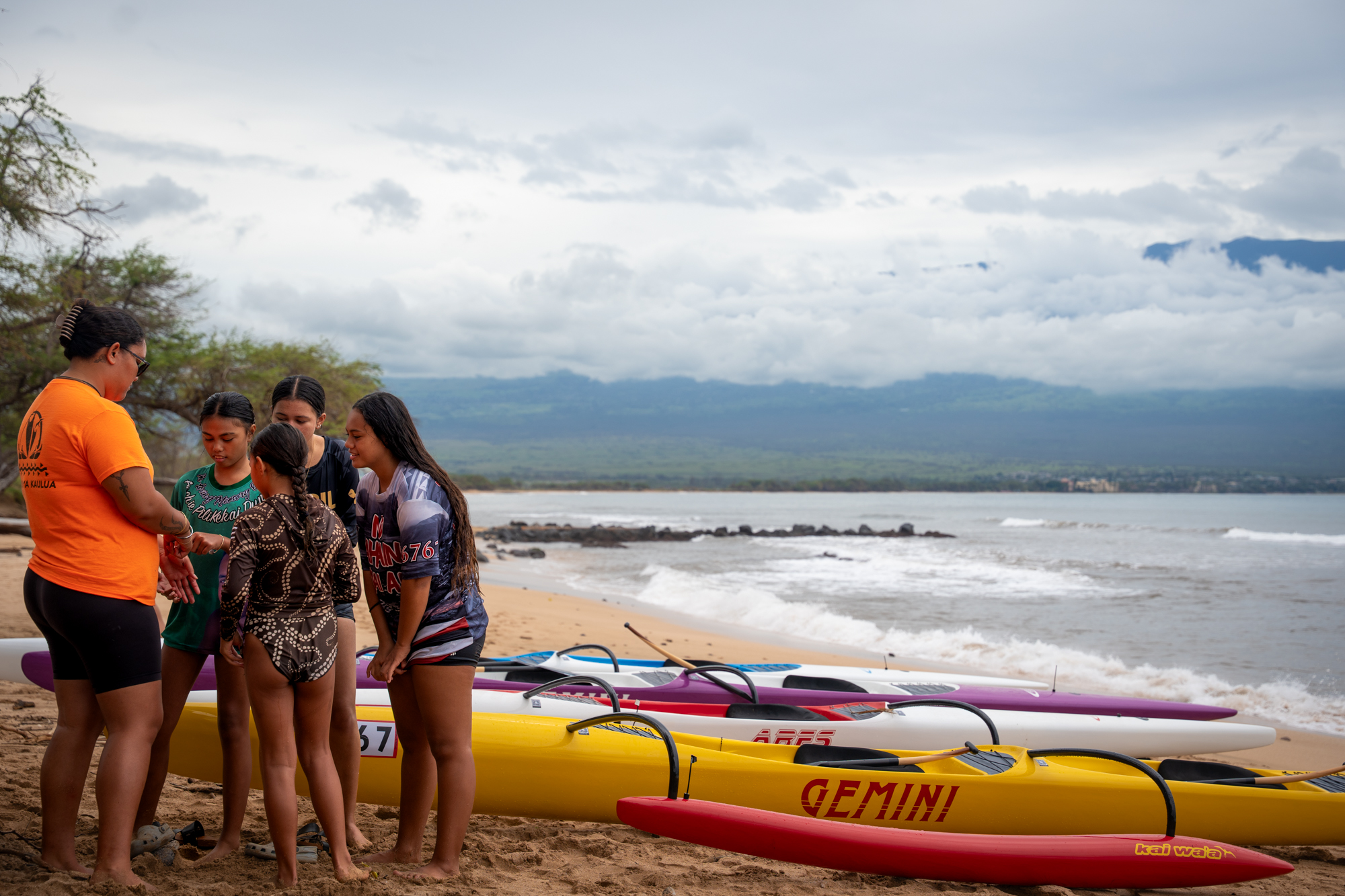
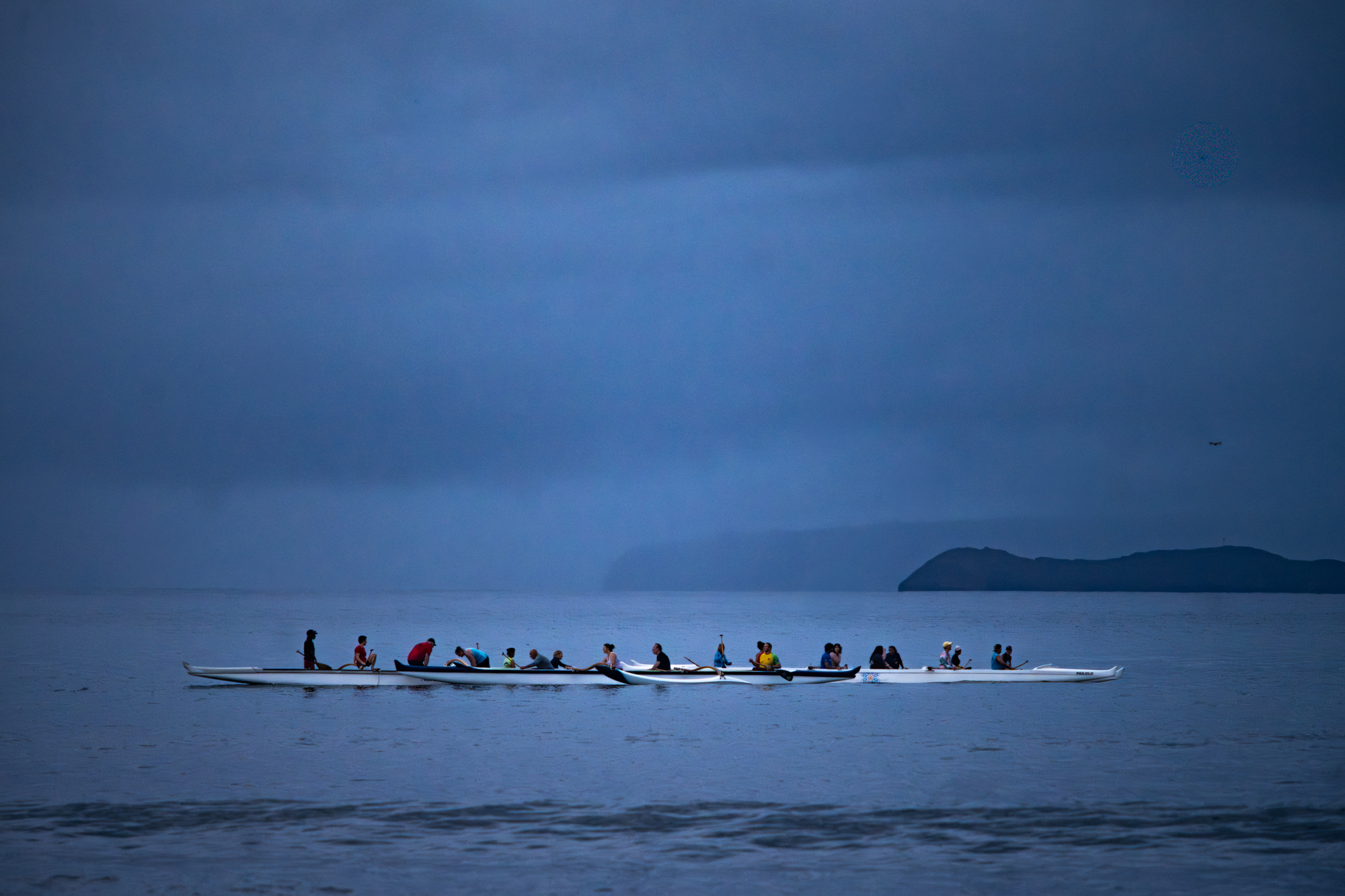
On a day of paddling and teaching, ‘Ihilani “Ihi” Garcia steps into her role as model and guide for the young girls learning. Her sister is among them, she takes pride in passing along the teachings of her Kupuna. Soon, she’ll walk in Kala’s shoes.
The Mo‘okiha O Pi‘iilani sways in Māʻalaea Harbor, shackled to the dock, facing a congested parking lot, awaiting her return to Lahaina. There, on the manu mua, are the people who came before — the great aunts, the uncles, parents, great grandparents, cousins and the unnamed relatives lost to time. One day, she will return home, and on another, she will reunite with her mother, Mo‘olele.