RESILIENCE
Mia Palacio, an 18-year-old Lahaina native, stands on a secluded hill overlooking Lahaina and faces her native hometown in silence. All she hears is “Paradise” by Rebel SoulJahz, Mia’s favorite Hawaiian band blasting through a phone speaker, and the howling wind.
She takes a seat in a beach chair, filled with remnants of sand from Maui’s scenic beaches. She rubs her arms anxiously.
“Sorry, it’s just a little cold and the wind makes me nervous,” she said. She takes a deep breath.
“I’m ready.”
Mia begins with the morning after Lahaina burned.
It was Wednesday, August 9th, 2023.
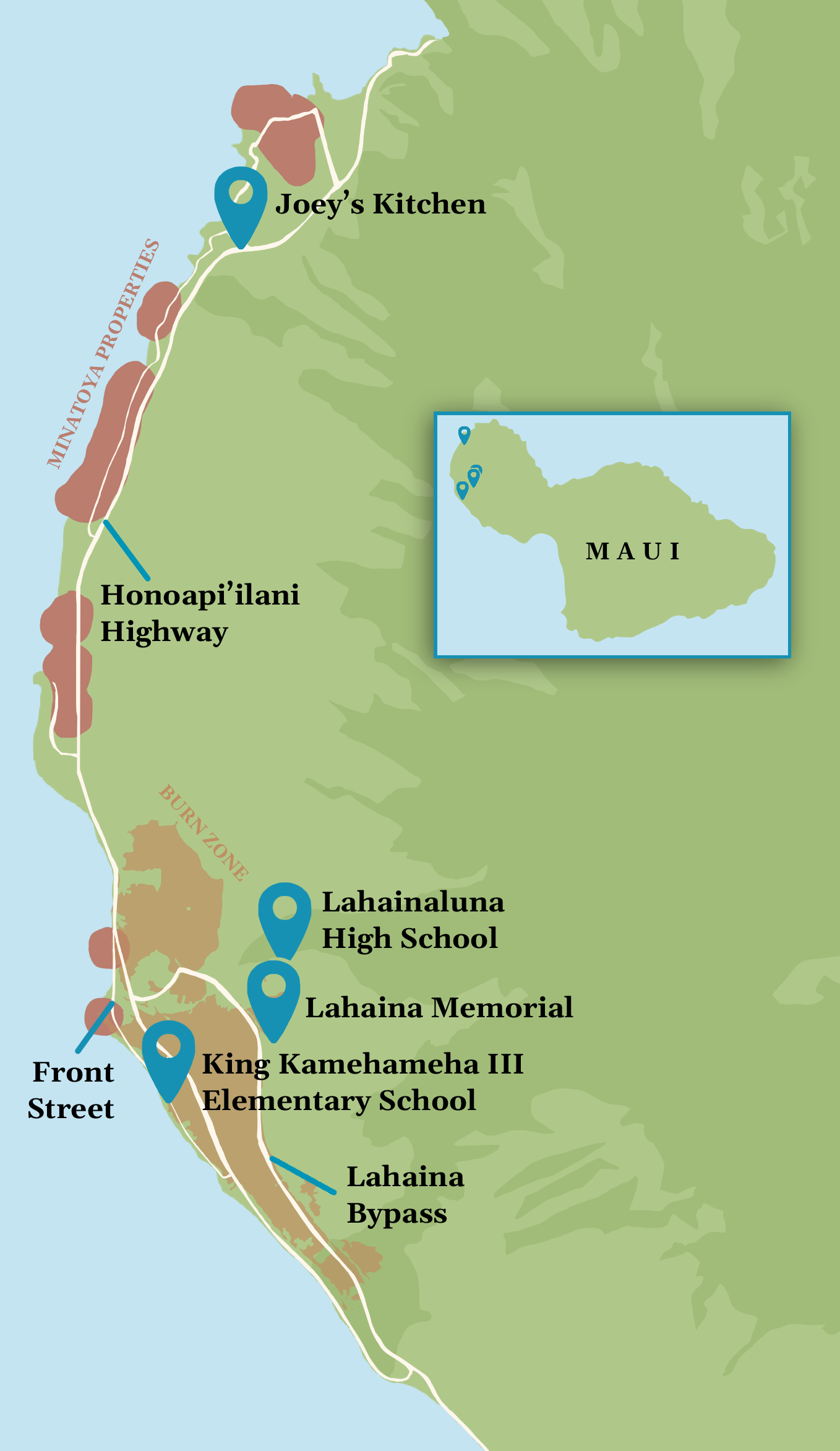
Like any morning, breakfast was served hot at Joey’s Kitchen in Napili. Mia was cooking in the kitchen and fried rice was on the menu.
Lahaina locals were crammed in the apartment-sized restaurant, awaiting a warm meal.
Torn bookbags with an assortment of personal belongings and keepsakes lined the corners of the Hawaiian restaurant. The foot-long aisles between two long mahogany tables were scattered with thin blankets and makeshift pillows.
Some residents — including Mia — had slept in the singular booth lining the back wall, the softest thing they could find to lay on. Those who did not fit inside camped out in their cars, bordering the horizon permeated by smoke.
Known for its Filipino-Hawaiian cuisine, seafood and hospitality, Joey’s Kitchen is a favorite among locals and tourists. Overnight, the charming local restaurant became a shelter and marked the beginning of a long journey of mourning, recovery and rebuilding.
The day before, a power line snapped and sparked a fire in Lahaina, a coastal town on Maui. The fire was the deadliest the nation had seen in a century. Winds nearing 80 miles per hour swept the flames through residential homes, schools and businesses, demolishing Front Street: Lahaina’s historic shoreline street once filled with wooden storefronts, art galleries and culture.
Mia never forgot the sound of that wind — the wind that spread the fire and burned her home down. She never saw the remains of her old home.
Mia was supposed to start her sophomore year at Lahainaluna High School that week. She was supposed to walk the halls to English, her favorite subject. She was supposed to drag her little sister, Leah, out of bed. She was supposed to say goodbye to her grandparents.
She did not know where they were, nor was she aware she had been declared missing.
Instead, she stood in Joey’s Kitchen, crying, overlooking her blackened hometown. Mia, Leah and the other kids were instructed to cook breakfast for the adults by Joey Macadangdang, the owner of the restaurant.
Mia was determined to pour whatever was left in her heart into the food, as she often does in her culinary endeavors.
She knew her people needed it.
The fires displaced nearly 12,000 people and brought more than 2,000 buildings to ashes, 85% of which were residential. What followed was the most severe affordable housing crisis Maui had ever seen, with the median price of a single-family home reaching nearly $1.2 million dollars.
Those who wish to remain in Lahaina must grapple with the trauma of the fires and the loss of their homes. As Lahaina rebuilds, it must decide how and who for.
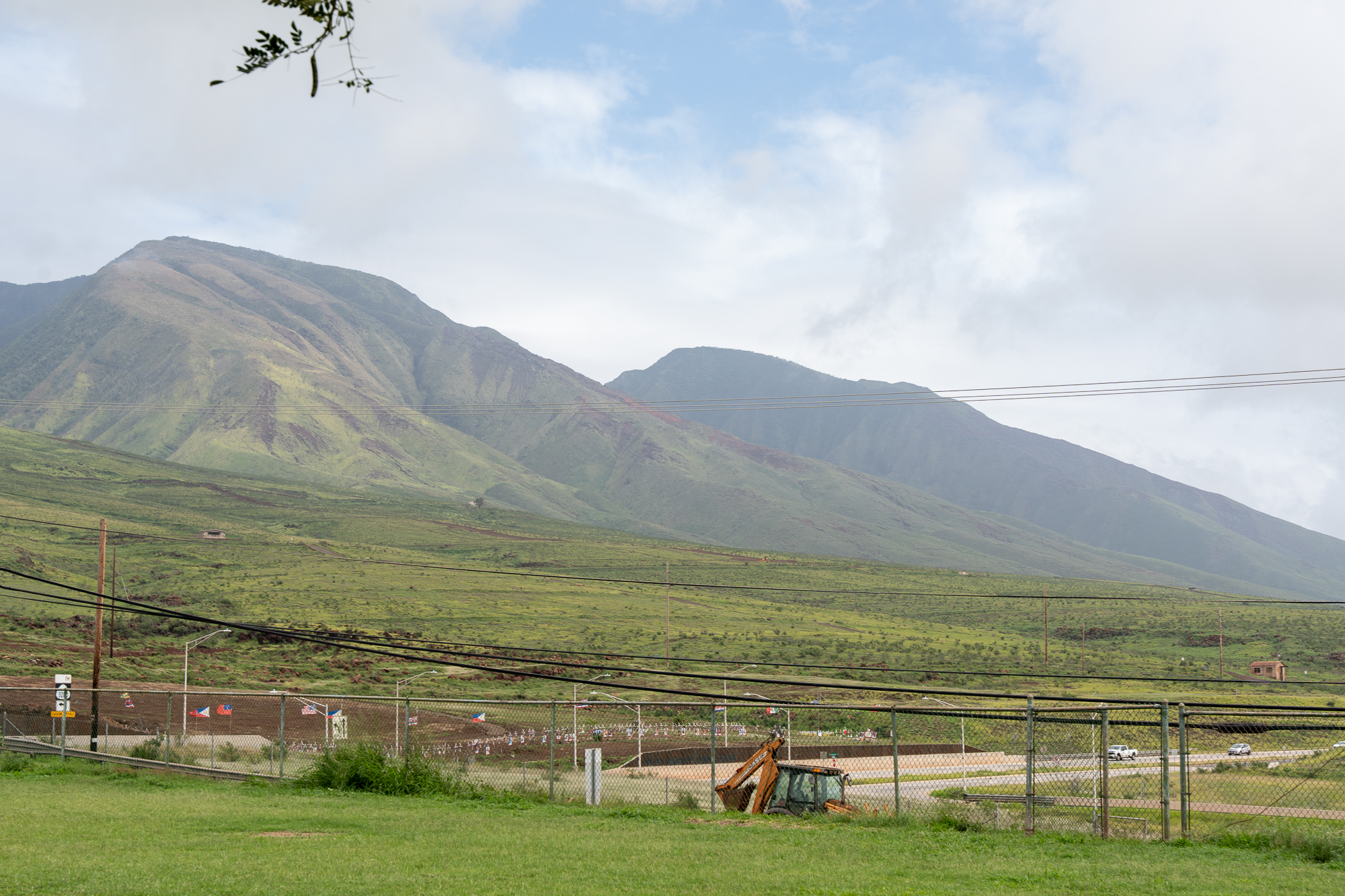
Lahaina sits at the base of the West Maui Mountains. The Lahaina Fires Memorial runs alongside the Lahaina Bypass.
Residents sheltered in their homes from what they had mistaken to be a windstorm powered by the Kauaʻ ula Valley winds.
News stations and information channels were severely delayed in warning residents of the imminent danger. As a result, residents didn’t realize the fires had begun or were spreading so quickly. For some, it was too late by the time they did.
“People were angry that there wasn’t a warning, or an alarm, or earlier evacuations because of how many people we lost,” Mia said.
Countless locals, including Mia’s family, didn’t evacuate until they saw billowing smoke approaching their yard. If they had waited for an official evacuation warning, Mia and her family would have been trapped.
“I thought my cousins were just trying to scare the little kids by saying it looks like it’s gotten here,” Mia said. “I didn’t want to believe any of it. I was kind of in denial for a bit.”
Locals suffocated in their cars as smoke consumed their vehicles. Gas stations and combustibles exploded one after another as the fires engulfed the town. Residents were trapped and burned in their own homes. People of Lahaina had to jump into the ocean, chased by the fire.
“None of my family members, the adults, know how to swim,” Mia said. “I was scared that we would have to jump in the ocean and my family wouldn’t survive swimming.”
The fires took 102 lives.
The missing list grew shorter day after day, as more people were found and confirmed alive.
“We found out Mia was alive because my son went to the Napili market and saw her in line.” Enriqueta Palacio, Mia’s grandmother, said.
After reuniting with the two girls, the Palacios re-evacuated. They stayed in Aston Mahana Hotels in Ka‘anapali, Enriqueta’s workplace at the time, for three nights. The fires were contained during their stay at the Aston but countless Lahaina families — like the Palacios — would jump from place to place, trying to make it back home. Some still are. Some never did.
Enriqueta’s employment allowed the Palacios a cost-free stay at the hotels. Other families were supported by the American Red Cross and Federal Emergency Management Agency (FEMA).
Eventually, after bouncing between hotels and a few other family members’ homes, the Palacios settled in with Mia’s aunt in Lahaina. It wasn’t the home that her grandparents “had bought and worked so hard for” that housed nearly 20 people, but they were rebuilding.
“The fire happened and I felt like the one thing that made me feel like I belonged was gone — I couldn't get any more of it — but that perspective quickly changed. I could still be a part of the Lahaina community by helping it recover and that's enough. It's not the same but being a part of the recovery is enough,” Mia said.
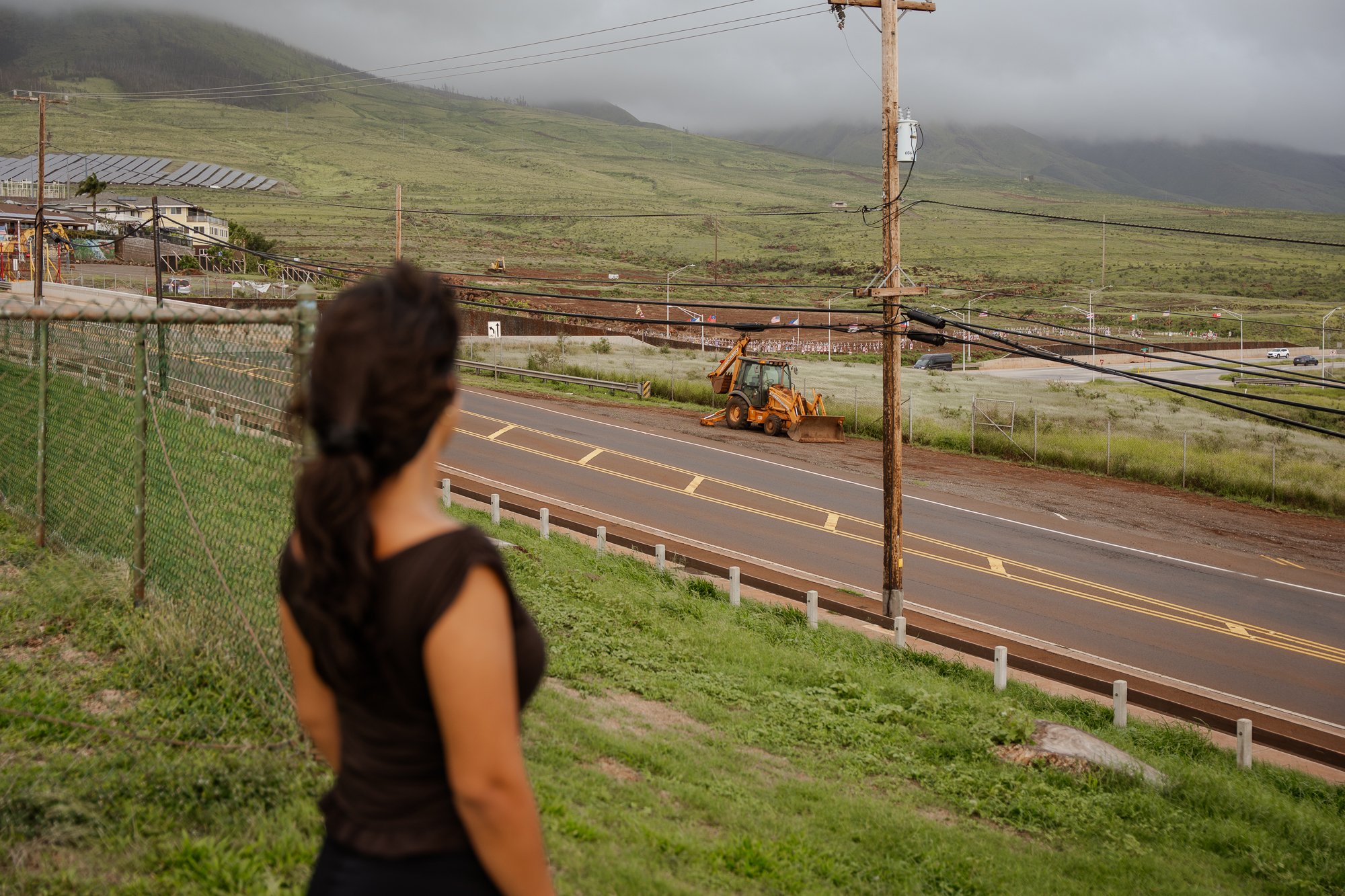
Mia looks over Lahainaluna Rd towards the Lahaina Fires Memorial. Her classmate Keyiro Fuentes perished in the fires.
Enriqueta and her husband, Antonio, had homeowners' insurance, which countless residents of Lahaina did not. Insurance paid for the Palacios’ new home.
Many other Lahaina residents lived in generational homes and never needed homeowners’ insurance. They had to rely on FEMA and other forms of government aid for housing assistance. While FEMA was originally set to leave in February of 2026, the U.S. Department of Homeland Security approved an extension of Temporary Housing Assistance for wildfire survivors until February 2027.
Despite the hundreds of millions of dollars in FEMA aid given to Maui wildfire survivors, there are people who remain victims to a financial system set to disadvantage them, Autumn Ness, the director of the Lahaina Community Land Trust, said.
Ness said to imagine the scenario of the average Lahaina resident that lost their home to the fires. “You had a mortgage on your house and what you thought was decent insurance. Your mortgage company doesn't care that your house isn't there anymore, they want their monthly payment,” she said.
Locals are forced to dip into their rebuild funds to pay monthly rent, slowly depleting their one chance to regain permanent housing. Ness knows a family that paid nearly $9000 a month in rent, taken out of their rebuild money.
“It doesn't matter how responsible you are, how many t's you crossed, the numbers don't work and that's the problem,” she said. “People feel shame about it.”
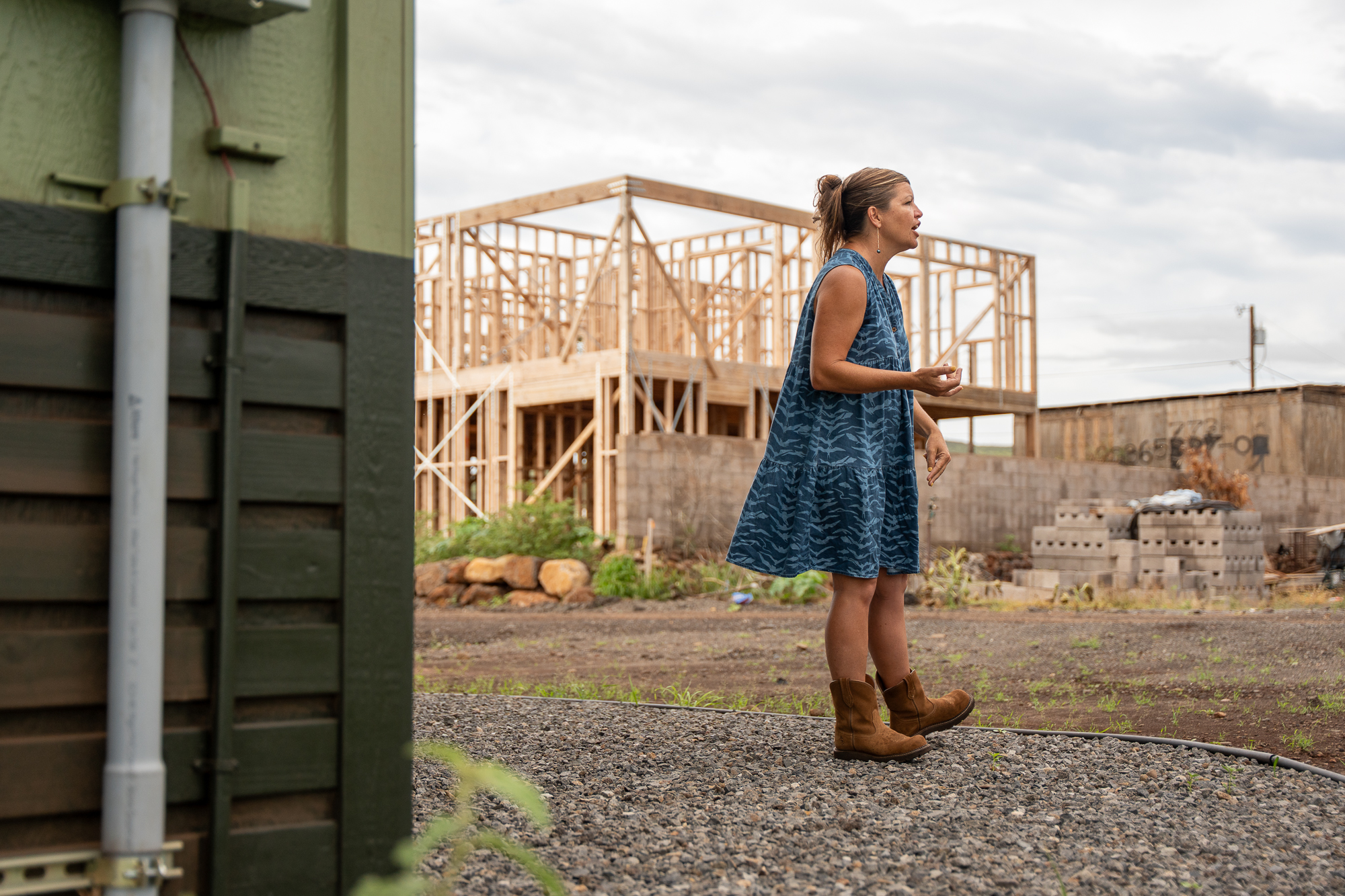
Autumn helped found the trust merely five days after the fires. “Our first rule to be a board member of this organization was you have to be willing to die for this place. No questions,” she said. “You have to be willing to put your body on the line.”
The question remains: Where will Lahaina residents go once FEMA leaves or their insurance money runs out? Where will they live if they can’t afford Maui?
Affording Maui is growing increasingly difficult for native residents. The tourism industry has made housing scarce and priced locals out, many of whom were forced off the island. A competing number of bills and exemptions regulating short-term rentals for tourists — often proposed by politicians backed by wealthy landowners — have left the affordable housing market broken just when Lahaina residents need it most.
Bill 9 is a zoning ordinance, passed by the Maui County Council in 2025, that phases out short-term vacation rentals in apartment-zoned districts. It requires that the affected units “be occupied on a long-term residential basis, or for a continuous period of six months or more per year.” The goal is for the rental units to house locals on a long-term basis, rather than tourists for a few days at a time.
In 1989, Maui County passed Ordinance 1797 which made it illegal for any units in apartment-zoned districts to be used as transient-vacation rentals. A county attorney named Richard Minatoya wrote a legal opinion stating that exceptions should be made to Ordinance 1797 because the law violated the landlords’ constitutional rights.
These — usually wealthy and non-local — landlords were placed on the “Minatoya List,” immunizing them to the county’s enforcement of 1797. They lobbied to legalize their short-term rental (STR) usage and were granted exceptions in 2014 through Ordinance 4167.
Bill 9 illegalizes these exceptions, reinstating the original terms of Ordinance 1797.
An analysis of the Minatoya properties, conducted by Lahaina Strong, a Maui-based community organization, found that owner-occupancy rates in STR-dominated properties have sharply declined in the past decade, largely because of online platforms such as Airbnb and VRBO.
For example, Island Sands in Māʻalaea, an 84-unit condominium built in 1973 for residential use, is now 83% STR, causing owner-occupancy rates to dip from 67% to 14.29%.
The report states that “this disruption has made it nearly impossible for the next generation of kama'āina, to find housing, not only by removing long-term rental options for Maui's working class, but also by artificially inflating the value of these units beyond the reach of local buyers.”
Matt Jachowski, a data scientist and software engineer that analyzed Bill 9 data for the county, said a home is affordable if a family can pay for it with five times their annual household income.
Since 2020, only 5% of sales in West Maui have been affordable, he said.
Bill 9 hopes to ease the longstanding affordable housing crisis in Maui by gradually reclaiming the Minatoya units for locals, yet concerns remain about the bill’s effectiveness.
“The problem with that simplistic view is that there's no guarantee that local people will buy these units and live in them. They're on the open market,” Kai Nishiki, previous chair for the West Maui Community Plan Advisory Committee and executive director of Maui Nui Resiliency Hui, said.
Lance Collins, an attorney in private practice and series editor for the West Maui book series, said that more housing units will not necessarily entail lower market-rates because market-rate homes across Hawai‘i are primarily purchased by non-locals who can pay higher rates than working class families like Mia’s.
In addition to second home ownership, wealthy non-locals or large firms may purchase these units and rent them out to “digital nomads,” who can live in Maui for longer than six months.
“There's nothing that requires all of these units that are going to flood the market to go towards local working families,” he said.
Enriqueta said affording Maui with the rising cost of living is difficult.
Jachowski acknowledges that even if every single unit impacted by Bill 9 houses residents, that still wouldn’t be enough supply to organically push prices down to make all housing affordable to residents.
“The fact is we cannot construct that housing fast enough. What Bill 9 does is it gives us kind of like an immediate shot in the arm. It adds some extra supply, but it certainly doesn't take us all the way there,” he said.
Nishiki is worried about the impending climate impacts on some of the shoreline Minatoya properties.
"The majority of the units in West Maui are on the shoreline and most of them are going to be impacted by sea level rise,” Nishiki said. She does not want locals investing in properties in hazard zones that may endanger them or their grandchildren.
Following the fires, Jachowski created a website that paired Lahaina residents with homes available for purchase and gathered extensive data on their housing preferences. He learned that residents wanted to stay in West Maui.
The sentiment is reflected in the local car bumper stickers, graffiti and posted signs: “Keep Lahaina Land in Lahaina Hands.”
“They incorporated that saying because after the fire, a lot of people tried buying land,” Mia said. “It was really sad. It’s disrespectful. “People had lost their homes and buyers said ‘I'll give you this money if you let us have this property.’”
The Lahaina Community Land Trust is a local non-profit that purchases and owns land in Lahaina with the purpose of community use, born five days after the fire in Ness’ tailgate.
“People were very clear that they are going to come for Lahaina land. Lahaina land was gold and it was already a gold rush,” Ness said.
The trust implemented deed restrictions, a commonly used housing protection tool, as a way to protect residents from disaster-driven displacement. They pay the difference between locals’ insurance and a property’s market-rate, and “go in as partners.” The deed restriction ensures that if the owner sells, the Land Trust has the first opportunity to buy the property and give it to another Lahaina family — keeping Lahaina land in Lahaina hands.
“I always tell people that my accountability is to the future generations of Lahaina. If I've done a good job, kids that graduate from Lahainaluna High School in 10 years will have a place to live and can open a business if they want to,” Ness said.
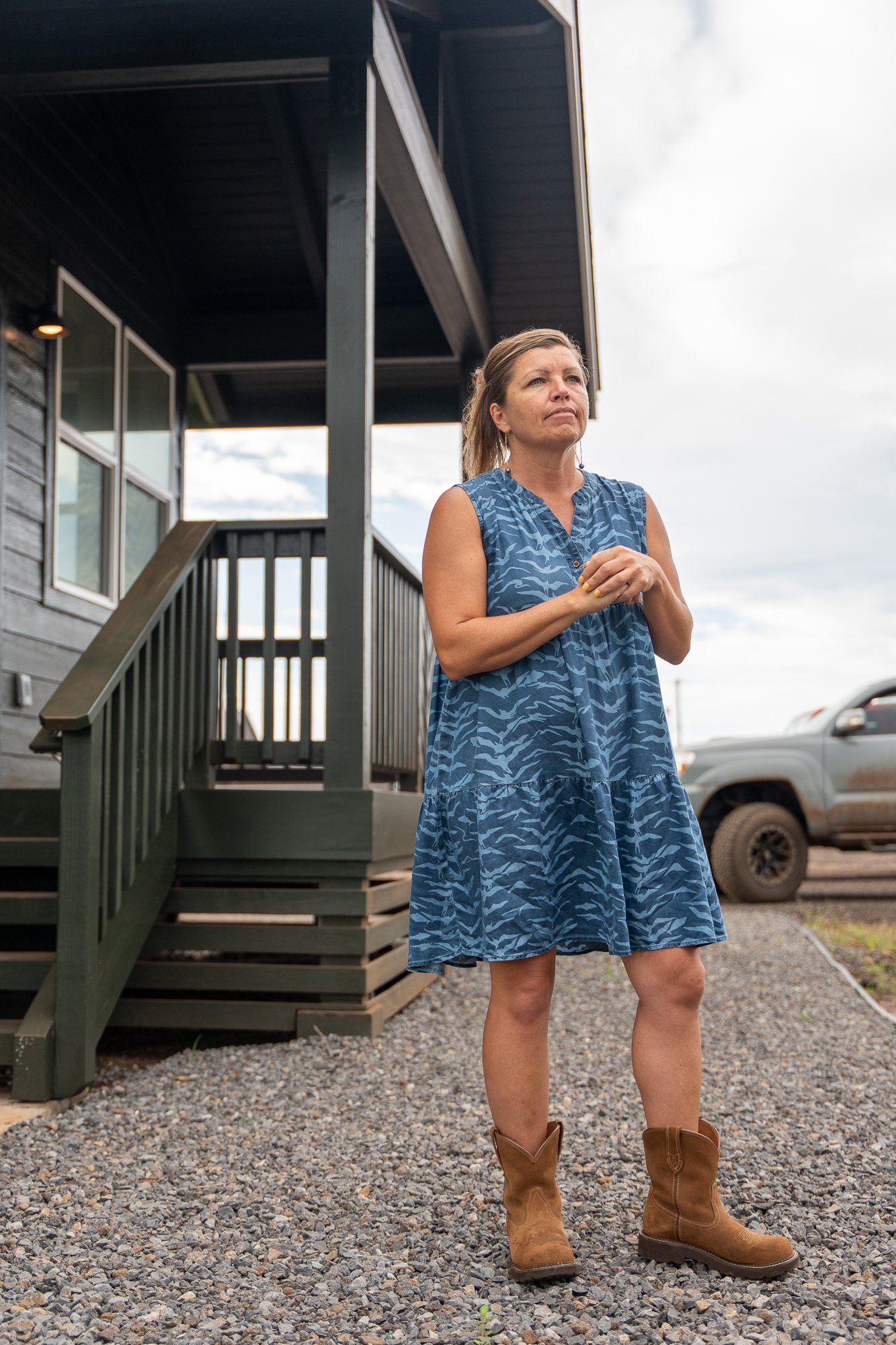
Autumn Ness, executive director of the Lahaina Community Land Trust, stands in front of a property the trust recently purchased. She says a family who lost their home in the fires will be moving in soon.
On March 18, 2026, the Palacios received a call from their contractors saying their new home was ready to be moved into.
The floors were tiled, freshly laid and speckled by mud. The fresh smell of paint infused the home. A tiny bench sat in front of the door, where Enriqueta sat, beaming.
Daylight flooded Mia’s new room. Her magenta curtains were drawn wide open. She bought a strawberry plush and a strawberry-themed pencil holder because she loves strawberries. Sprawled across her new bed, she scrolled through Amazon looking for new furniture. Leah joined her as the two speculated about the first night in their new home.
After graduating from Lahainaluna High School in spring 2026, Mia will attend the University of Hawai‘i Maui campus on a scholarship, majoring in Psychology, Culinary Arts and/or Agriculture. She plans to study abroad for two years of college to experience all the world has to offer.
After her travels, though, Mia will return to Lahaina.
She dreams of opening her own restaurant in Lahaina, featuring cuisines from all over the world. She dreams of Front Street up and running again with local businesses. She dreams of the native plants of Lahaina flourishing again. She dreams of more homes for people.
We're the generation that is helping rebuild Lahaina. We're going to know how to take care of it, what's good for it, what it needs. We're turning this into a Lahaina that's more resilient.
Mia’s last order of business before graduation is her senior culinary project on rice. She must cook six famous rice dishes from international cuisines. As always, she pours her heart into the recipes, proportions and pricing. Her next iteration of Jollof rice will happen in her new kitchen, overlooking her hometown as it rebuilds.
She is finally home.

Mia Palacio, a senior at Lahainaluna High School, stands in Kelawea Mauka Makai Park. She came to the park often as a kid, it’s only a short walk from her house which burned down in the 2023 Lahaina fires.