ECO
When 28-year-old Daniel Jacintho was growing up on his family’s ranch in Kula, upcountry Maui, just seeing a herd of axis deer made for an exciting day. They were still rare, then. He and his father, William, recall spotting the deer on the way out to early morning Mass and putting the service off to jump at the chance to hunt one of them.
Today, the presence of axis deer is constant. Many days, he doesn’t even have to leave the gravel driveway between his house and his father’s to take one down. Dozens of them stare back at him through his scope from atop a rocky ridge overlooking the cities and beaches below as he aims his rifle.
With a deafening crack, a doe goes down, sending her herd running into the cover of the cacti below.
The entire process takes no more than 20 minutes, but it isn’t fun anymore. It’s a matter of life or death for his family’s ranch, passed down over five generations.
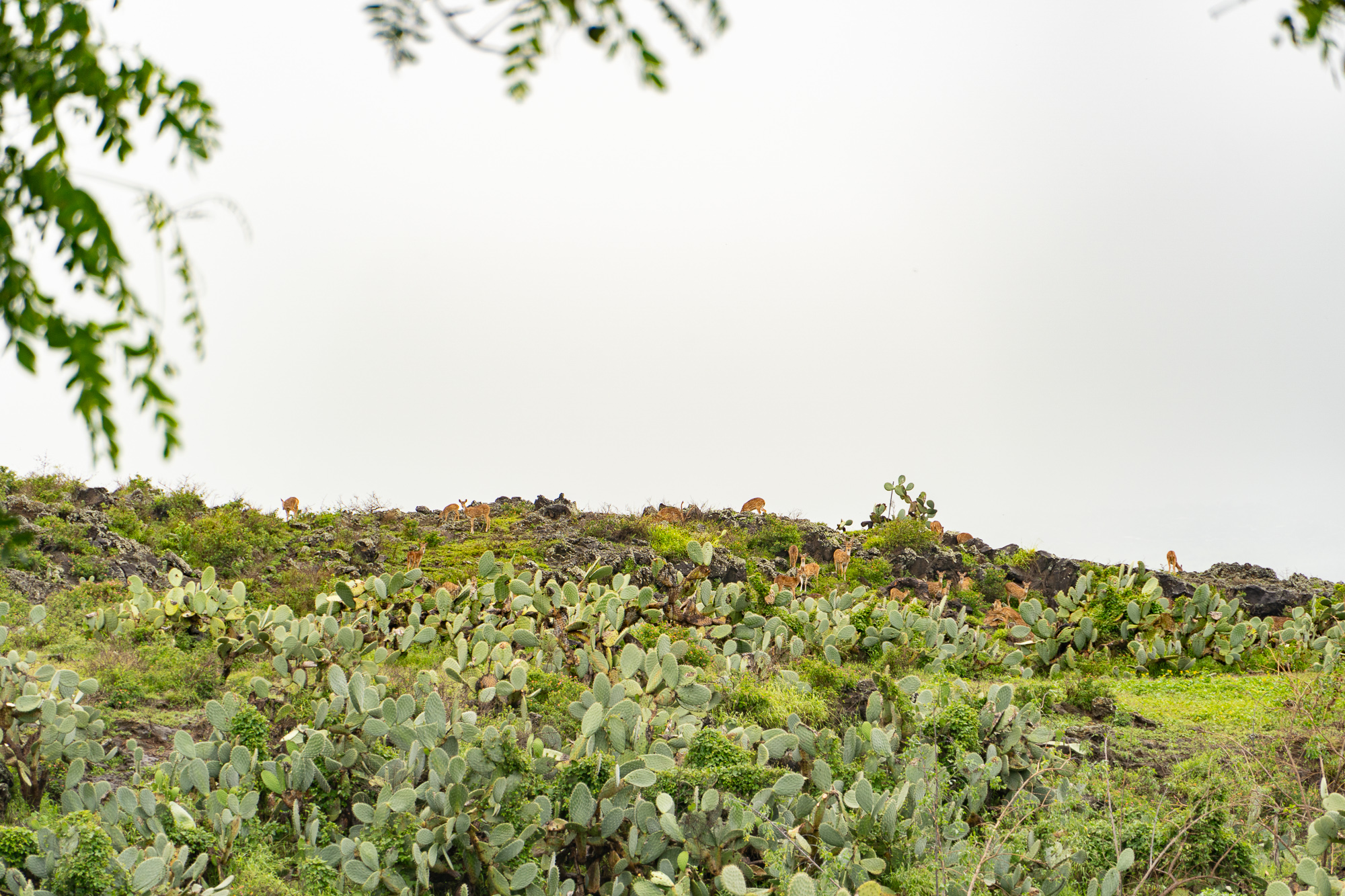
Axis deer can often be found out grazing during the day, as they have no natural predators on Maui.
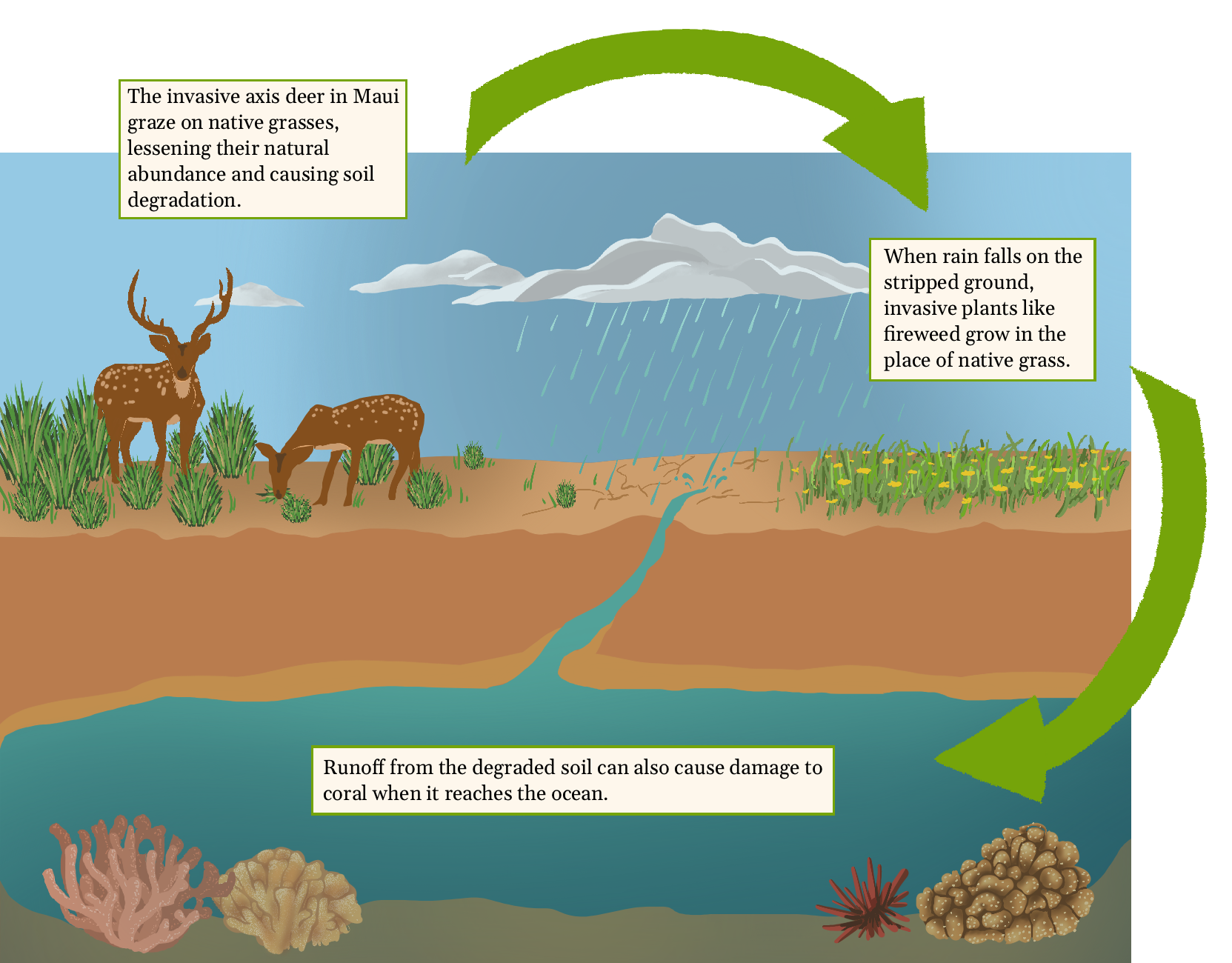
Unlike cattle, axis deer, an invasive species brought to the island just a few decades ago, will graze almost any grass straight down to the dirt, whether native, pasture or crop. When herds numbering into the hundreds move into an area, they leave large swathes of land completely barren and exposed to the elements, contributing to downstream erosion that stifles reefs and destroying both wildlife habitat and the livelihoods of farmers and ranchers.
By the time Daniel was in sixth grade, the Jacintho family was cutting down cacti to feed their cattle. By seventh, they were moved away from the ranch to find better pasture on leased land elsewhere, ceding more and more ground to the invaders.
“I remember being really scared that the ranch would stop,” Daniel said. “I was like, man, we're not going to have cows at the house.”
Axis deer are among the most destructive of Maui’s many invasive species, destroying thousands of acres of agricultural land and fragile ecosystems alike, but they’ve also become a center of the island’s hunting culture. For an island heavily reliant on expensive food imports, a free, local source of protein is difficult to pass up — but hunters, ranchers and conservationists all agree that careful management is key to ensuring that the costs of the deer population aren’t simply passed on to others.
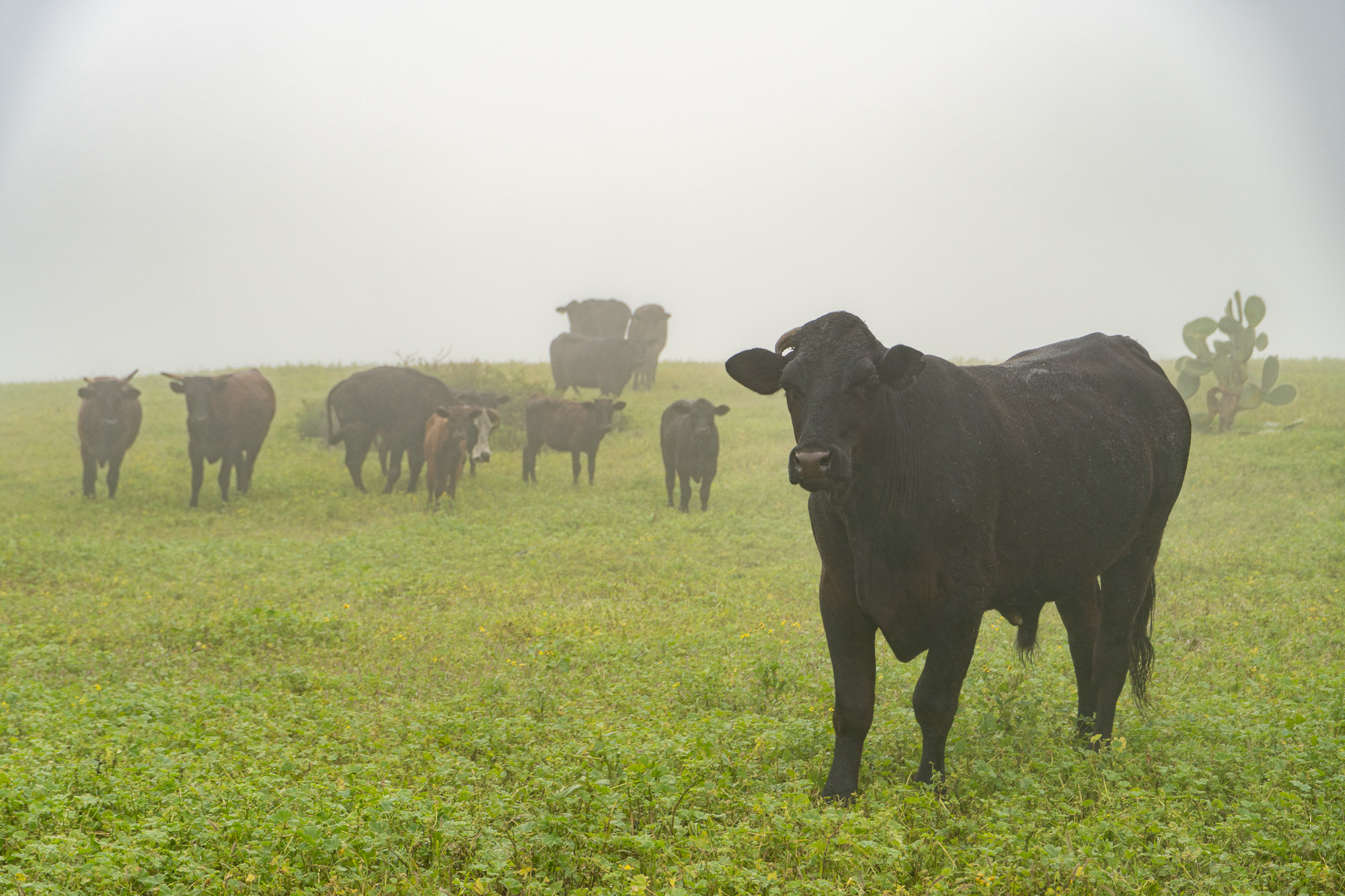
Due to having larger teeth than the deer, the axis deer are able to eat grass straight down to the dirt, leaving little for the cattle to graze on.
In 1959, just five axis deer were introduced to the slopes of Haleakalā, followed by another four in 1960. Today, the population has exploded to tens of thousands of voracious, rapidly breeding grazers which terrorize everything from downtown parks to remote upcountry ranches.
In their native range in India, axis deer are perfectly adapted to a hard life. Under constant pressure from predators like tigers, leopards and wild dogs, they breed back-to-back, often twice per year. In India, as few as one in three fawns reach maturity; on “island time,” with no predators and plentiful grazing, nearly every fawn survives.
By 2022, the deer’s population had peaked at about 60,000, causing over $1 million in agricultural damage each year. Ranchers have been hit particularly hard, with every rancher on the island having to cut back the size of their herds, often by half or more.
Maui has suffered increasingly frequent and severe drought conditions in recent decades due to climate change, leaving little opportunity for the landscape to recover from overgrazing. Last year was the second driest on record for Maui.
A month ago, the cactus-dotted pastures flanking the Jacintho family compound were nothing but dirt. Now, they’re lush with yellow flowers. To an outsider, it would appear that the Jacinthos’ troubles are over — but the rain only brings another problem to the surface.
The beautiful yellow flowers that dot the fields of Kula aren’t native, nor are they edible to cattle. In the wake of soil disturbance by deer or other forces, non-palatable invasive weeds like fireweed are often the first to spread, crowding out native grasses or pasture. Despite the land’s lush appearance, ranchers are still being pushed to the brink.

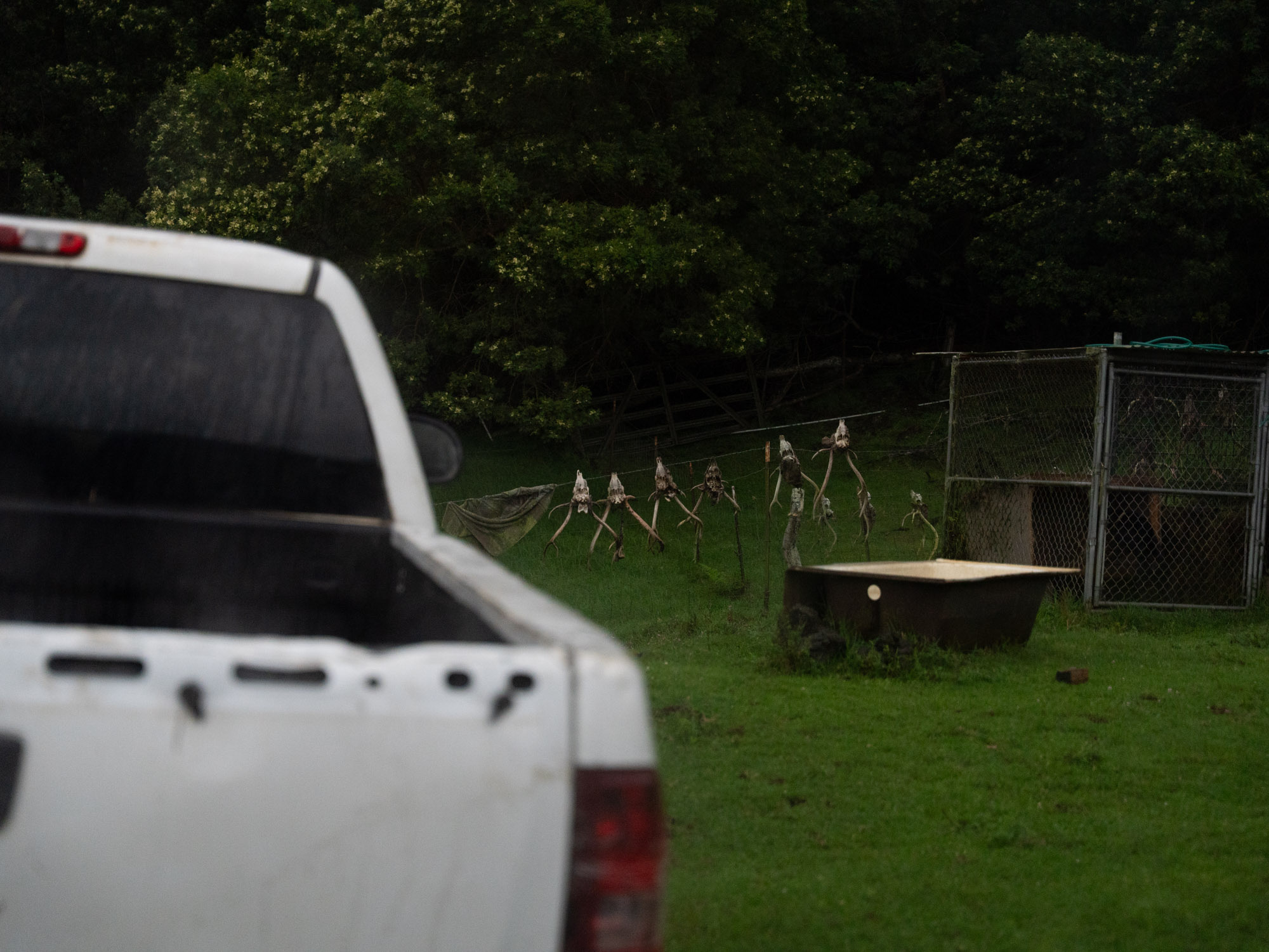
Hunting is a large part of Hawaiian culture and the bones of the deer are often used as trophys or decoration.
Hawai‘i’s Department of Land and Natural Resources has created a number of programs to reduce the population, including installing high fences around thousands of acres of watershed forests and incentivizing landowners to help through the Landowner Incentive Program, which offers a $50 bounty for axis deer tails brought in by large landowners who qualify.
Since the program was first funded at the end of 2023, almost 18,000 tails were turned in by ranchers, controlling the population while providing a small source of revenue to reinvest in projects like improved fencing or more bullets.
But not every landowner qualifies, leaving smaller ranches in the line of fire. Theresa Thompson, president of the Maui Cattlemen’s Association, says that more needs to be done to help ranchers protect their livelihoods.
A rancher's first job is to grow food, grow grass, to feed his cows,” Thompson said “The deer come in and eat it, and these cowboys just fall down on their knees and cry and pray. They don't know what to do.
“We're all tired at the end of the day, after making all this fence, and after fixing water lines and doing what we do all day,” Theresa said. “And then you're trying to sit down to rest, and here come the deer, just crawling out of the forest. It's just awful.”
Theresa’s solution? Shoot them all.
“If people want to have deer as a game mammal, they need to have their own property and fence it high enough and strong enough to keep their deer in their property and take their hunts on their property,” Theresa said. “They cannot be jumping over the fence and eating the next man's food. That's trespassing. That’s stealing. It's just not right.”
But Theresa’s solution is not a popular one. Even the Hawai‘i Division of Forestry and Wildlife favors maintaining a population of about 20,000, a level they say will allow recreational hunting without causing further harm to the environment or landowners. Jeff Bagshaw, outreach and education specialist for the department in Maui County, says that this number is tentative, and that further surveys are underway to determine what densities – and where – would be acceptable to the public.
“There are people who love them, people who hate them. Our mission at forestry and wildlife is to provide resources and hunting opportunities as well as protect watersheds and endangered species,” Bagshaw said.
Despite their negative impact, axis deer have become a central part of hunting culture on Maui and a local source of protein for hunters, their loved ones, and low-income communities. Troy Helmer, president of the Maui Hunter and Sportsmen’s Club, describes axis venison as “the best meat you can possibly have.” Just one or two deer per month is enough to keep his family fed without paying record-high prices for beef, and he often has plenty to share with others.
Maui Nui Venison, headquartered on Ulupalakua Ranch, is one of very few companies able to meet the FDA requirements to sell axis venison on the commercial market. By coordinating hunts across client ranches, they suppress axis deer populations while bringing venison into the food system on Maui and beyond. Last year, they killed over 15,000 axis deer, producing almost 460,000 pounds of meat. Almost 50,000 pounds were donated through their Holo ‘Ai Program, which distributes free ground venison to resident families across the island.
For an island with no large native game animals, a local, rapidly regenerating, and virtually free source of protein is a boon to hunters. But, as any rancher could point out, there is no free lunch: whether they’re outcompeting beef cattle or smothering fish, the costs simply fall elsewhere.
“There's always this idea of, ‘We're going to create new protein sources.’ That's not how nature works,” Bagshaw said. “You don't create new sources of carbon.”
In any natural system, resources are limited; this is especially true for an island like Maui. While game meat might be more easily accessible for some, axis deer don’t make food out of nothing. Five axis deer eat the same amount of grass as one beef cow, driving ranchers to cut their herds and increasing the price of beef. Many, including the Thompsons, have resorted to sending calves off-island for rearing, removing their beef from the local supply chain.
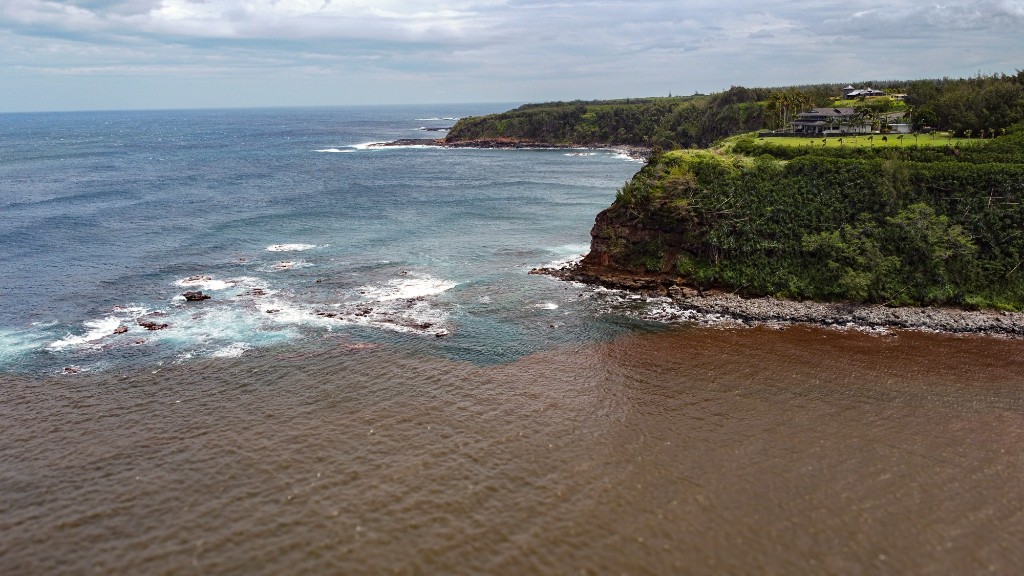
Sediment runoff, including that caused by invasive ungulates like axis deer, goats, and pigs, has also been a major contributor to the destruction of Maui’s coral reefs, reducing the productivity of the island’s fisheries, which were Hawai‘i’s main protein source prior to European contact and remain a diet staple today.
“Another man says, ‘Oh, this deer is a great source of protein, and it's free!’ Because you don't own land, you just harvest them,” Theresa said. “It’s not free.”
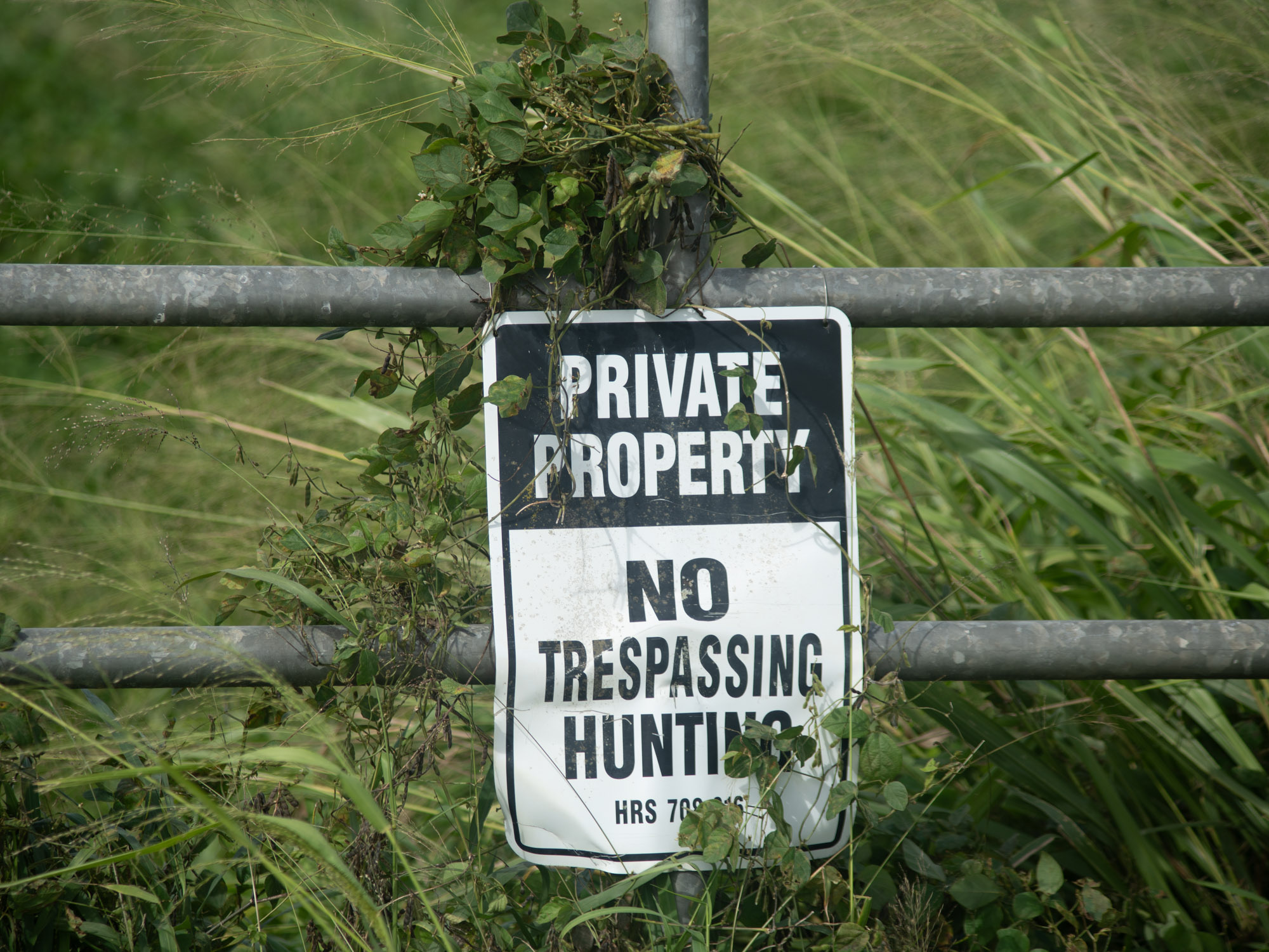
Hunters have been known to trespass on private property to hunt axis deer that are not within public hunting areas.
For hunters, the solution is clear: let them in, and they’ll take care of the deer problem.
Helmer is the designer behind the “Give us Axis” sticker campaign, which calls on landowners to open their land up to hunters.
“Large landowners, they're all calling liability problems, and basically they just don't want people on their ranches,” Helmer said.
While some ranchers do have arrangements with a small number of hunters, others find themselves restricted to public hunting areas where deer are less plentiful – and smaller. Helmer says that allowing hunters to take down deer on private property is a win-win. Hunters want bigger deer, and they’re willing to pay to get them.
“If someone gives a person or a club access, then they increase their security. They have people telling them what's going on,” Helmer said. “They stop poachers by having a presence acting as security, and they also can pick up rubbish and report any problems that might be on a road, erosion or downed fences or trees and whatnot. So, there are benefits to allowing people to have access.”
For ranchers, however, it isn’t so simple. Hunters – particularly those who come uninvited – often do more harm than good.
“Everybody wants to be able to hunt. Nobody wants to come to the ranch and fix the fences when the deer go through them,” Daniel said. “Nobody wants to come and work to be able to hunt. Nobody wants to put in effort any other way other than, ‘We're just going to do you this favor and shoot the deer,’ right? And then you bring the wrong guys around, and now they're shooting the cattle.”
Daniel himself is of two minds about the deer. On one hand, they’ve been devastating to his family’s livelihood. On the other, now that the population has decreased, it’s become easier to learn to live with them. He even operates a small-scale outfitting company offering hunting tours of his property. The goal isn’t to make a great deal of profit, but to start replacing deer on the landscape with cattle again. Each hunter who comes to his property is required to shoot three does before taking a buck. Daniel has set the hunts at a price that allows him to buy one new cow for every five deer: the same ratio as the amount of pasture needed to feed each animal.
“Some days, I wake up and I say, ‘I'm just going to load my gun and shoot them all,’ but then there's nothing. What if I do have kids one day, how am I going to take them hunting?” Daniel said. “I love when people call me to book their hunt and they're like, ‘Yeah, my son has never gotten a deer before. We’ve tried. We've hunted all over our places in Vermont or wherever forever, and we just have bad luck every time. Can you help us get a doe?’ I love those calls, the first shooters.”
If eradication isn’t feasible, reducing the deer population to a manageable level will require cooperation across private and public land and between ranchers, biologists and hunters.
“There's a lot of different answers, and it's figuring out the facts and what actually is possible. And to me, that starts with data,” Daniel said.